Tom Brady Dog
Oh my dog

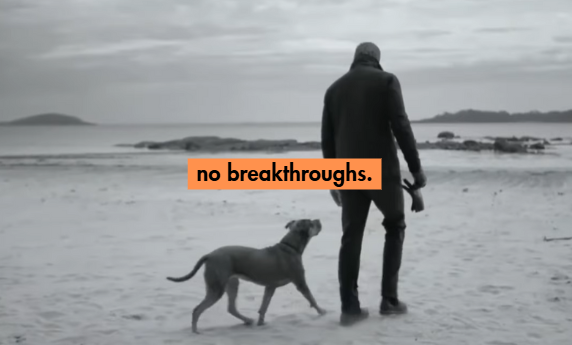
Tom Brady is a guy who used to throw a ball very, very successfully for a very long time. Because of this, Tom Brady has been called the GOAT and the GOAT is afforded many luxuries in life, including the ability to leverage non-invasive cloning technologies through a simple blood draw of his family’s elderly dog before she passed.
What the hell am I talking about?
Last week, Thomas Edward Patrick Brady Jr., who won like fifteen Super Bowls in a row and owns a terrible football team from Las Vegas,1 revealed that his current dog, Junie, a pretty-adorable pitbull-mix, is a clone of his former family dog Lua, that died in 2023.
There were dozens of stories about this incredible story: The Guardian, Live Now Fox, People, The New York Times, bastion of dog-related discourse 9Honey and, of course, bastion of dog-related discourse, Dogtime.com.
They all included this amazing quote from Brady:
“A few years ago, I worked with Colossal and leveraged their non-invasive cloning technology through a simple blood draw of our family’s elderly dog before she passed.”
Which, of course, is a sentence that Tom Brady — I would bet my house on2 — has never actually said or thought out loud.
The quote came attached to a press release from the de-extinction company Colossal Biosciences, which has made a lot of noise because of its plans to “de-extinct” species like the Woolly Mammoth and the Tasmanian Tiger. Earlier this year, it claimed to have brought back the extinct Dire Wolf in a series of splashy front pages in the New Yorker and Time and blah blah.
So, Colossal, it’s brought out this press release on November 5 saying something along the lines of “Hey, we just acquired Viagen Pets and Equine, which is the world leader in cloning and the only other company in the world that is cloning endangered species”
As part of this press release for the acquisition, they offered up their Chief Biology Officer for interviews and provided investor statements from … yes, Mr Tom Brady, including the quote above.
Brady’s celebrity status, I guess, makes this news but, does it have to be? The press release (which I received) was pretty dry and there is very little actual story here. Other celebrities have had their dogs cloned before, cloning technology has been around a long time — what was different or… new here?
Does it benefit the outlets that wrote about this? There was very little in the published stories about pet cloning, ethics or any practical information a reader might be interested in. Within a day, the story disappears or gets overwhelmed by SPORTS TAKES anyway. Wouldn’t it just be better to not write these stories at all? What truly is the point?
There is an interesting science journalism story here, but it requires a journalist doing journalist stuff and speaking to Brady or Colossal or anyone at all??? to actually hear what that story is. I contacted Brady for comment of course [on Instagram, fully expecting to never hear a single word from him], and also reached out to a few contacts.
One of those contacts told me this is all legit, the dog was definitely cloned — which I never doubted — and Thomas lives awfully close to Colossal CEO Ben Lamm. Yes, the company really did go over to Tom’s house and draw the blood from his pet and then clone it.
So… where’s this STORY? I want to hear how this whole thing occurred. I don’t want to just have some three sentence statement that Tom Brady has (maybe) never seen? Give me something of substance. Where’s the ambition here?
Colossal, the company that cloned Brady’s dog, has been in the spotlight recently for its dramatic “dire wolf de-extinction” story that was splashed over US magazine front pages and across the web to much excited posting and also much hand-wringing3. It drew a lot of criticism from experts over these de-extinction claims — many suggest that the “dire wolf” created by the company is little more than a genetically modified grey wolf — but Colossal has essentially doubled down on its claims.
Whatever you think of its motives, Colossal has mastered the press cycle: It can generate interest even in its acquisition of a cloning company that practically no one has ever heard of. It’s masterful puppeteering from its press team, which also inspired me to write this newsletter and provide the company with yet another plug.
And so to end, this, from the Onion:

A few stray thoughts about the week in science writing:
- James Watson died at 97. He is credited with co-discovering the structure of DNA, the stuff that allows me to write these nonsense newsletters on a Sunday arvo. This obituary from Sharon Begley is rare stuff, the kind of science writing that illuminates, zooming way out to focus all the way in. Watson, my reading of this and other material suggests, really couldn’t get out of his own way. He believed himself to be the Top Dog. And while his achievements are written in stone, if you don’t hand the chisel over, then what is it all for?Sharon Begley passed away in 2021, but her impact on the field of science writing is massive. There is a fellowship and science writing prize in her name. With this obituary, you can understand why.
- Via Secrets of Grimoire Manor, this short piece by Maximilian Milovidov on the Anxious Generation that centres young people in the conversations around a social media ban. Just a month until Australia implements its poorly-designed and ill-conceived social media ban.
I am a big NFL guy I just don’t find any of this relevant to a story about cloning. He won seven. Not in a row. Whatever. ↩
Jokes on you, as if I own a house. ↩
De-extinction, in my mind, will never escape the Park Paradigm: That is, every single piece of writing ever about de-extinction must mention Jurassic Park. ↩